
he Timeless Elegance of Handwoven Sarees
In a world driven by fast fashion and fleeting trends, handwoven sarees stand as a powerful symbol of heritage, craftsmanship, and timeless beauty. Worn for centuries across the Indian subcontinent, these sarees are more than garments—they are living stories, woven patiently by skilled artisans who pass their knowledge from one generation to the next. Each handwoven saree carries within it the rhythm of the loom, the touch of human hands, and the cultural identity of the region it comes from.
A Legacy Woven in Time
Handwoven sarees trace their origins back thousands of years, deeply rooted in India’s cultural and historical landscape. Ancient texts, temple sculptures, and paintings depict women draped in intricately woven textiles, highlighting the saree’s enduring presence. Unlike machine-made fabrics, handwoven sarees are created on traditional looms, where every thread is interlaced with care and intention. The process is slow, meticulous, and deeply personal—often taking weeks or even months to complete a single saree.
This time-intensive process is precisely what gives handwoven sarees their unmatched character. Minor irregularities in the weave are not flaws but signatures of authenticity, reminding us that a human hand—not a machine—crafted the fabric.
Regional Diversity and Artistic Expression
One of the most fascinating aspects of handwoven sarees is their regional diversity. Every weaving cluster in India has developed its own distinct style, motifs, and techniques, influenced by local culture, climate, and history.
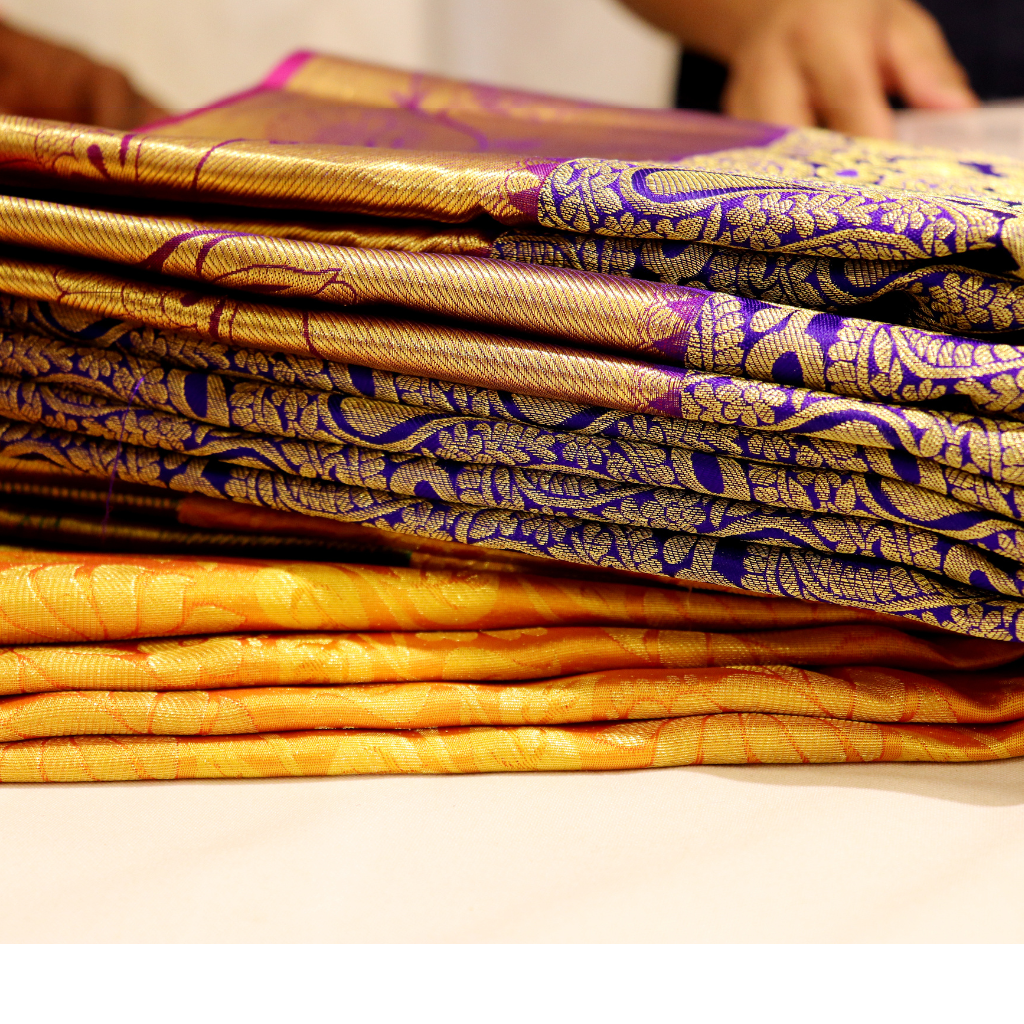
Banarasi sarees from Uttar Pradesh are known for their luxurious silk, intricate brocade work, and Mughal-inspired motifs such as florals and paisleys. Kanjeevaram sarees from Tamil Nadu are celebrated for their rich colors, heavy silk, and contrasting borders woven with gold zari. Paithani sarees from Maharashtra feature vibrant hues and peacock or lotus motifs, while Jamdani sarees from Bengal are admired for their delicate, almost ethereal patterns woven directly into the fabric.
Each of these sarees tells a regional story—of festivals, rituals, royal patronage, and everyday life—making them wearable pieces of art.
The Craft Behind the Cloth
The creation of a handwoven saree involves multiple stages, each requiring specialized skill. From sourcing natural fibers like cotton or silk, dyeing the yarn using traditional or natural dyes, setting up the loom, and finally weaving the fabric, the process demands patience and precision.
Weavers often work in family units or small communities, where techniques are shared orally and through practice rather than written instruction. This knowledge, refined over generations, allows artisans to produce complex patterns and textures that machines struggle to replicate authentically.
Despite technological advancements, the handloom remains irreplaceable for certain designs. The tactile richness, breathability, and durability of handwoven fabrics are direct results of this traditional process.
Sustainability and Slow Fashion
In recent years, handwoven sarees have gained renewed attention as consumers become more conscious of sustainability and ethical fashion. Handloom weaving is inherently eco-friendly—it consumes minimal electricity, often uses natural fibers and dyes, and produces little waste.
Choosing a handwoven saree supports the principles of slow fashion: buying less, choosing better, and valuing longevity over disposability. Unlike mass-produced garments that lose appeal quickly, a handwoven saree ages gracefully. With proper care, it can last decades and even be passed down as an heirloom.
Moreover, investing in handwoven textiles directly supports artisan livelihoods, helping preserve traditional crafts that are increasingly threatened by industrialization.
Cultural and Emotional Significance
For many, handwoven sarees are deeply tied to life’s most meaningful moments. They are worn during weddings, festivals, religious ceremonies, and family celebrations. Often gifted during milestones such as marriages or births, these sarees carry emotional value that goes far beyond their material worth.
A grandmother’s silk saree, carefully stored and later worn by a granddaughter, becomes a bridge between generations. The saree holds memories—of laughter, rituals, and love—making it an intimate and cherished possession.
Styling Handwoven Sarees in the Modern Era
While handwoven sarees are steeped in tradition, they are remarkably adaptable to contemporary fashion. Designers and stylists today experiment with innovative drapes, blouse designs, and styling techniques to make these sarees appealing to younger generations.
Pairing a classic handloom saree with a minimalist blouse, statement jewelry, or even modern footwear can create a look that is both rooted and refreshing. Handwoven cotton sarees are increasingly worn in professional and casual settings, proving that tradition and modernity can coexist effortlessly.
Preserving a Precious Heritage
Despite their cultural importance, handloom industries face significant challenges. Power looms, cheap imitations, and declining demand have impacted weaver communities across the country. Preserving handwoven sarees requires conscious effort—from consumers choosing authentic products to policymakers supporting artisan welfare.
Awareness plays a crucial role. Understanding the difference between handwoven and machine-made textiles helps consumers make informed choices. When we recognize the labor, skill, and history behind a handwoven saree, we begin to value it not just as clothing, but as cultural heritage worth protecting.
Conclusion
Handwoven sarees are timeless treasures—embodiments of artistry, tradition, and sustainability. In every thread lies the dedication of a weaver, the legacy of a region, and the soul of a centuries-old craft. As fashion continues to evolve, the handwoven saree remains steadfast, reminding us that true elegance is not about trends, but about authenticity, purpose, and enduring beauty.
By choosing handwoven sarees, we do more than adorn ourselves—we honor craftsmanship, empower communities, and keep an irreplaceable tradition alive