
History ofBanarasi
The history of the Banarasi saree is closely tied to the Mughal era and the migration of skilled weavers to Varanasi (Banaras). It began in the 14th century when Mughal emperors fostered the art of intricate silk weaving, which became a fusion of Persian and Indian motifs using real gold and silver threads. Weavers, initially from Gujarat, settled in Varanasi and brought their expertise, which was further refined under Mughal patronage, with Emperor Akbar reportedly using them to decorate his palace
The Rich History of Banarasi Sarees
Banarasi sarees are among the most treasured and iconic textiles of India, known for their luxurious silk, intricate weaving, and timeless beauty. Originating from the ancient city of Varanasi (formerly Banaras) in Uttar Pradesh, these sarees have a history that spans centuries and reflects India’s rich cultural and artistic heritage.
The roots of Banarasi sarees can be traced back to ancient times when Varanasi was a major center of learning, spirituality, and trade. However, the true evolution of Banarasi weaving flourished during the Mughal era, around the 14th to 17th centuries. The Mughal emperors were great patrons of art and craftsmanship, and they brought with them Persian aesthetics that deeply influenced Indian textile traditions. This fusion led to the development of elaborate floral motifs, intricate jaal patterns, and finely detailed borders that became hallmarks of Banarasi sarees.
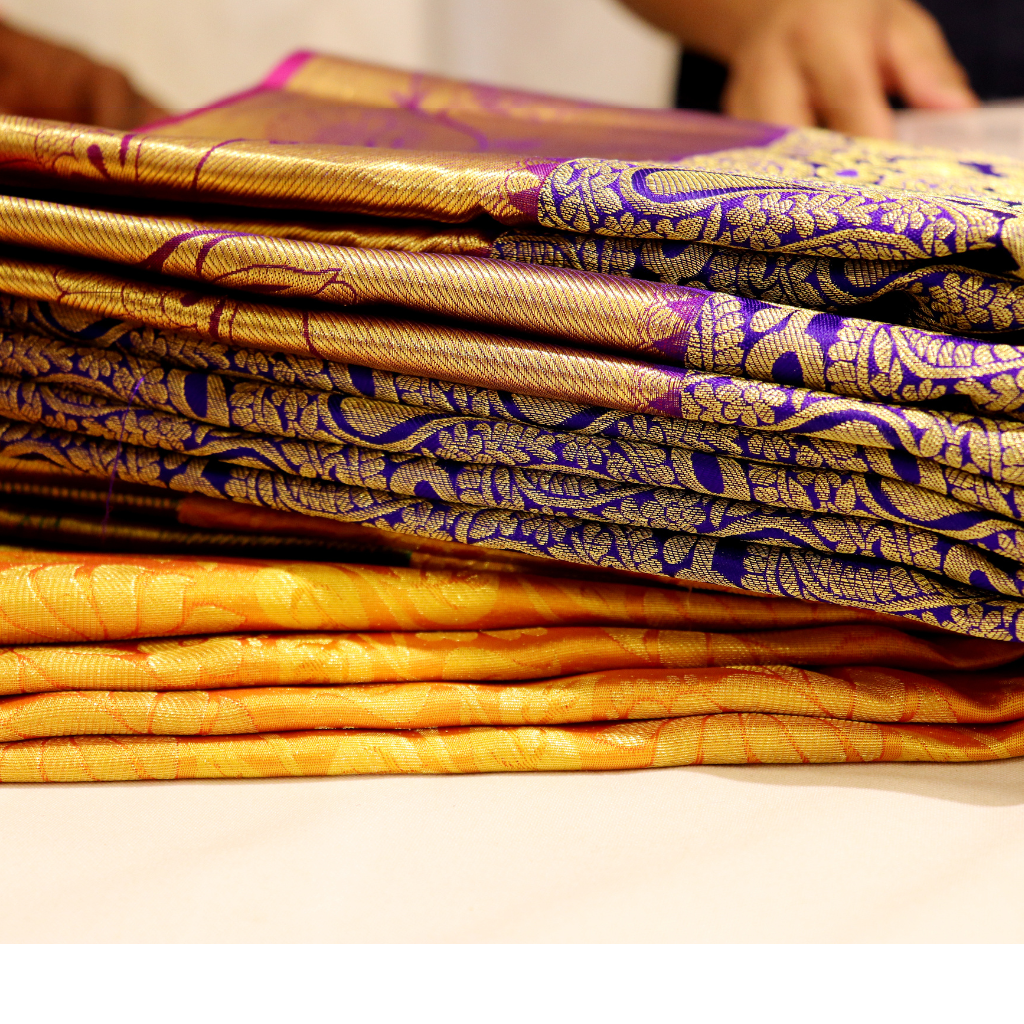
Traditionally, Banarasi sarees are woven from pure silk and decorated with zari, a thread made of gold or silver. The designs often feature Mughal-inspired elements such as bel (creeping vines), kalga and bel motifs, butis (small floral patterns), and architectural forms inspired by temples and palaces. Each saree is a result of painstaking craftsmanship, with skilled artisans spending weeks or even months to complete a single piece on handlooms.
During the medieval period, Banarasi sarees gained immense popularity among royalty and aristocracy. They were considered symbols of wealth, elegance, and status. Brides, especially in North India, began to include Banarasi sarees as an essential part of their wedding trousseau—a tradition that continues to this day. The sarees were not just garments but heirlooms passed down through generations.
The British colonial era brought both challenges and changes to the Banarasi weaving industry. The introduction of mill-made fabrics and changing fashion trends affected traditional handloom weavers. Despite these difficulties, the artisans of Banaras preserved their craft through dedication and resilience, keeping alive techniques passed down over generations.
In modern times, Banarasi sarees have adapted to contemporary tastes while maintaining their traditional essence. Today, they are woven not only in pure silk but also in variations such as organza, georgette, and shattir. In 2009, Banarasi sarees were granted the Geographical Indication (GI) tag, recognizing their authenticity and cultural significance.
The history of Banarasi sarees is a story of artistry, tradition, and enduring beauty. Each saree carries within it the legacy of centuries-old craftsmanship, making it not just a piece of clothing but a celebration of India’s rich textile heritage.